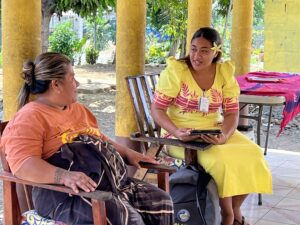
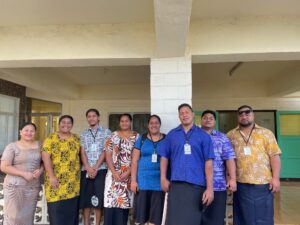
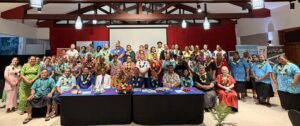
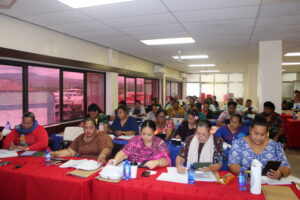
The Samoa Bureau of Statistics in partnership with UNFPA supported some staff from the Census, Survey and Demography division to undertake the kNOwVAWdata course . The kNOwVAWdata is an initiative by UNFPA and the Department of Foreign Affairs and Trade to support and strengthen regional and national capacity to measure violence against women in Asia and the Pacific. In the Pacific the support of the Spotlight Initiative, the University of Melbourne, UNFPA Pacific Regional Office and SPC are working to improve data for measurement of violence against women and children. Upon completion of the whole course a knowledge sharing workshop was conducted on Thursday the 7th of December 2023 at the Le Lava Hotel Conference room. Participants from the Samoa Victim Support Group (SVSG), Faataua le Ola (FLO) also known as service providers, the National University of Samoa (NUS), Ministry of Women Community and Social Development (MWCSD) and UNFPA attended the workshop. The ethical and safety measures to consider in preparation of any survey on violence against women was the main lesson learnt by the course participants and this was shared and discussed with the invited participants
8 key issues to consider in Putting Women First
1. Safety of respondents and research team comes first
2. Studies need to be methodologically sound
3. Confidentiality is essential for safety and data quality
4. Need careful selection, in-depth training and ongoing support of team members
5. Must take action to reduce distress
6. Research team need clear understanding and training about referral and support mechanisms
7. Obligation to help ensure proper interpretation and use of study results
8. Only include violence questions in other surveys if 1-7 can be met!
NEWS & EVENTS
Population and Housing Census 2026 Week 3 Update
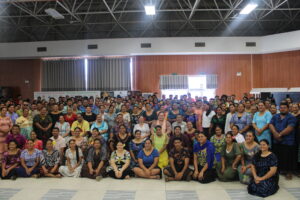
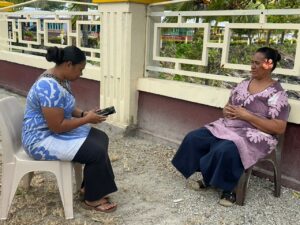
𝗧𝘂𝘀𝗶𝗴𝗮𝗶𝗴𝗼𝗮 𝗼 𝗧𝗮𝗴𝗮𝘁𝗮 𝗺𝗮 𝗙𝗮𝗹𝗲 𝟮𝟬𝟮𝟲 | 𝗣𝗼𝗽𝘂𝗹𝗮𝘁𝗶𝗼𝗻 𝗮𝗻𝗱 𝗛𝗼𝘂𝘀𝗶𝗻𝗴 𝗖𝗲𝗻𝘀𝘂𝘀 𝟮𝟬𝟮𝟲 𝗨𝗽𝗱𝗮𝘁𝗲 𝟯 O le vaiaso lona 4 lenei talu ona amata le 𝗧𝘂𝘀𝗶𝗴𝗮𝗶𝗴𝗼𝗮 𝗼 𝗧𝗮𝗴𝗮𝘁𝗮 𝗺𝗮 𝗙𝗮𝗹𝗲 𝟮𝟬𝟮𝟲, olo’o faatinoina e le Ofisa o Fuainumera Faamauina. O nisi nei o vaaiga sa iai le vaiaso lona tolu o